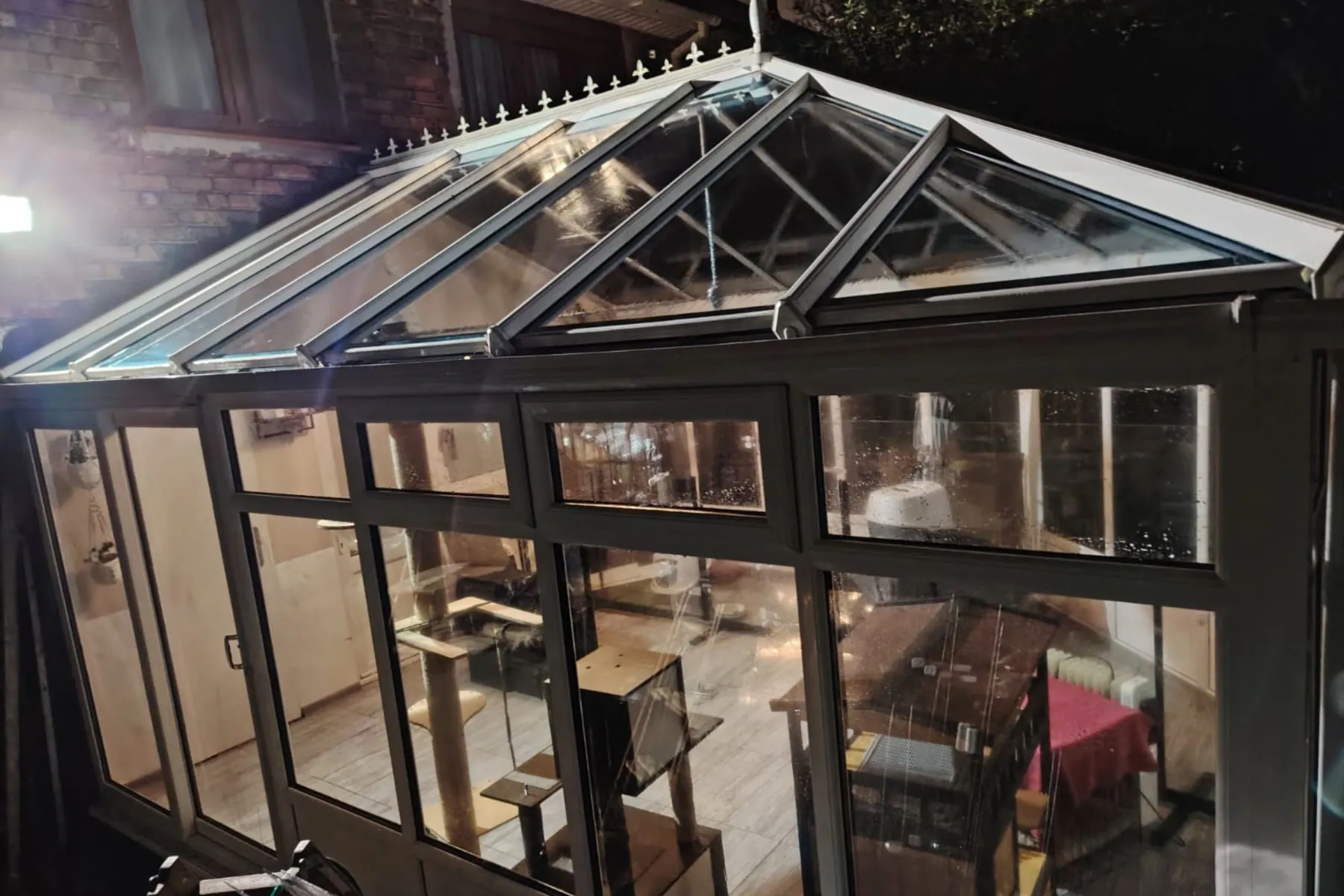
Conservatory and Roof Glazing Cleaning in Hockley
Hockley’s glazed roofs are mostly on its buildings more than its gardens. The Jewellery Quarter was built for making things, and what has replaced many of the workshops is apartments, so the roof glass here is north lights, atriums and rooflights, with a conservatory or porch on the houses beyond the Quarter. The low-pressure method that suits a conservatory roof suits all of it.
What Hockley has instead is more interesting and considerably more glass. Jewellery workshops were built to catch daylight, so roof glazing and north-facing lights over the benches are a signature feature of the older buildings, and the conversions have kept them. Add atrium roofs where a works has been opened up into apartments, stair glazing running two or three storeys in one elevation, and the shopfronts of the jewellers themselves, and the Quarter carries a great deal of glazed roof per building. It is simply not attached to anybody’s living room.
- Service
- Conservatory Cleaning
- Area covered
- Hockley, B18
- Local authority
- Birmingham
- How we do it
- Soft wash on the roof, no pressure on seals or polycarbonate
- From our Selly Oak base
- About 20 minutes
- Price
- Quoted per property before we start (how quotes work)
- Booking
- Call or WhatsApp 07788 574283
Why north lights and atrium roofs lose their light in B18
Roof glazing is the recurring job here and it is neglected for a structural reason: it faces up. A vertical window sheds rain, while a roof light collects everything that lands on it and holds a film that dulls the light beneath without ever looking obviously dirty from inside. In a workshop or a studio that has a practical cost, because the whole point of that glazing was even daylight over a bench. Atrium roofs over converted stairwells behave the same way and are worse to reach. The other real problem is city grime on tall stair glazing, which films over slowly enough that nobody notices until a landing that used to be bright has gone grey.
- Original workshop roof glazing and north lights, which hold film instead of shedding it and quietly kill the daylight below
- Atrium and lightwell roofs over converted works, reachable from nowhere convenient and cleaned far too rarely
- Tall stair and landing glazing running two or three storeys in a single elevation, with deep reveals and glazing bars
- Glass canopies over shop and building entrances, whose upper face collects grime and pigeon mess
- Conservation area and listed frontages, where nothing may rest against original detail
- Old putty, timber glazing bars and metal frames that will not tolerate an aggressive wet clean
Working a protected Quarter frontage from the pavement
Everything here is done from the ground with a water-fed pole, which is not a preference so much as the only method that fits a protected frontage and a three-storey elevation of original glazing. Purified water is used for the rinse so the glass dries clear without spotting. Roof glazing is worked from the ground with the pole, never by walking on it, because a Victorian workshop roof light is not a walking surface and never was. Timber bars, old putty and original metal frames get a controlled damp clean, never a soaking, and anything perished is photographed and reported for a glazier to deal with.
- Water-fed pole from ground level throughout, with nothing leaning against a listed or conservation area frontage
- Purified water rinse so tall glazing dries clear instead of drying to a film of spots at first light
- Roof glazing worked from the ground only, never walked on, since original workshop lights carry no load
- Timber bars, putty lines and original metal frames cleaned with a damp cloth, with failures reported not patched
- Glazing bars on roof lights worked carefully with a soft brush, which is where the extra time on a Quarter building goes
More detail on the equipment and the order of work: the full conservatory cleaning process.
Glass worth cleaning in the Quarter
The work divides between businesses and blocks. Workshops, studios and offices book their own roof lights and glass canopies, and for a jeweller the visit also has to fit around the security routine. Visits run Mon to Fri 8am to 6pm and Sat 9am to 6pm, and an 8am start usually finishes before the doors open. Residential customers are apartment owners, tenants or block committees, and what they buy is communal: the atrium, the stair glazing, the entrance canopy. Hockley is about twenty minutes from Selly Oak, so a slot within the week is usually possible, planned around where the van can stop.
Glazing bars and reach, not square metres, set a Hockley quote
Reach, glazing bar count and access decide the figure, and none of them is visible in a square metre measurement. A modern sealed unit is one pane. A Victorian workshop window of the same area might be twenty small panes in timber bars with a deep reveal round them, and that is several times the work, so it gets quoted accordingly. How long it has been left is the other factor, and a roof light untouched for years may need two applications. There is a limitation worth stating: where the film is on the inside face of roof glazing, cleaning the outside only gets you half the light back, and internal access has to be arranged separately.
From glass canopies every few months to a yearly clean of workshop roof glass
Glass canopies over entrances want a clean every two or three months, since their upper face collects grime and pigeon mess quickly. Communal stair and atrium glazing sits well on twice yearly, timed so one visit lands before the darker months when the light through it is doing real work. Workshop roof glazing is worth an annual clean if daylight over the bench matters to what happens underneath it, and the first clean usually shows how much light had been lost. Anything overlooking the canal or a busier road benefits from the shorter interval.
First time customer. Excellent service and great job. Will definitely be using them again in the future.
I’m very satisfied with the service I get
Charles was great. He was very professional and did a great job.
Hockley · Conservatory Cleaning
Frequently asked questions
Workshop north lights, atrium and lightwell roofs, rooflights, glass entrance canopies, and conservatories or porches on the houses beyond the Quarter. All of them are cleaned from the ground at low pressure, with a purified rinse so the glass dries clear.
It is roof glazing angled to face north, built into jewellery workshops so the benches got steady daylight without direct sun moving across the work. The conversions have kept a lot of it. Because it faces upward it collects grime and holds it, and the loss of light happens so gradually that nobody notices until it is cleaned. In a working studio that is a practical improvement rather than a cosmetic one.
Yes, and in a conservation area that is what the designation expects. A water-fed pole system reaches three storeys from the pavement, so nothing touches the frontage. Those windows take longer than modern units because of the glazing bars, and the quote reflects that time.
Almost always the freeholder or the managing agent, since an atrium roof is communal by definition and no individual flat has access to it. If you are on a residents’ committee it can be quoted as a schedule with one invoice for the block, usually alongside the stair glazing and the entrance screen, which is one setup and one visit.
Not the way this is done. Old putty and timber will not take a soaking or an aggressive detergent, so those elements are wiped with a controlled damp clean, and no pressure goes anywhere near them. Where putty has already perished or a bar is soft, it gets photographed and passed on so you can get a glazier to it before it fails behind a clean pane.
Yes. A glass canopy faces the sky, so it collects grime, leaf and pigeon mess on its upper face and looks worse from the street than the glass around it. It is cleaned from the ground with the pole at low pressure, the drainage channel along its edge is cleared, and the frame is rinsed so nothing streaks the door below.
Other cleaning we do in Hockley
Tell us about the job
Send a few details or photos and we’ll come back with a clear price and an estimated time, with no obligation.