Why Deep Cleaning Is the Reset Your Birmingham Home Truly Needs
·Updated ·8 min read·Deep Cleaning
A deep clean in Birmingham city is a grease, soap scum and mould job rather than a limescale one. The city is normally supplied with soft water from the Elan Valley, so scale barely forms. What does build up is cooking fat on tiles, cupboard fronts and extractors, and black mould in bathroom grout and sealant. That is where the hours go, and it is why the kitchen and the bathrooms decide the quote.
Why is a Birmingham deep clean different from one down south?
Because of the water, and the figures are worth having rather than taking on trust. Severn Trent’s published composition table for the Elan Valley supply treated at Frankley puts total hardness at roughly 29 to 51 mg/l of calcium carbonate, which is soft on both of the classification scales in common use. The water comes down an aqueduct from an upland catchment in mid Wales, which is exactly the profile you would expect to be low in dissolved minerals. If you have moved up from the south east, the descaler under the sink is close to redundant in the city.
Two qualifications matter. It is normally soft rather than always soft, because a River Severn backup exists so the aqueduct can be shut down for maintenance, and that water is a good deal harder. And the claim is about Birmingham city, not the region: Sutton Coldfield sits on South Staffs Water at 188.9 mg/l, far above the Frankley figure, with the Barr Beacon zone covering part of Great Barr higher again. Advice written for one of those situations is close to useless in the other, which is set out in full in why Birmingham has soft water and Sutton Coldfield does not.
Does soft water mean less cleaning?
Less scale, not less work, and there is a trade-off almost nobody mentions. Hardness minerals bind up soap and suppress lather, so a hard-water household needs more product to get a foam. In soft water the same dose lathers immediately and keeps lathering, and because people judge the dose by the foam, they carry on at hard-water habits. Soft water also rinses soap away less readily than hard water flushes it, so more of it stays behind.
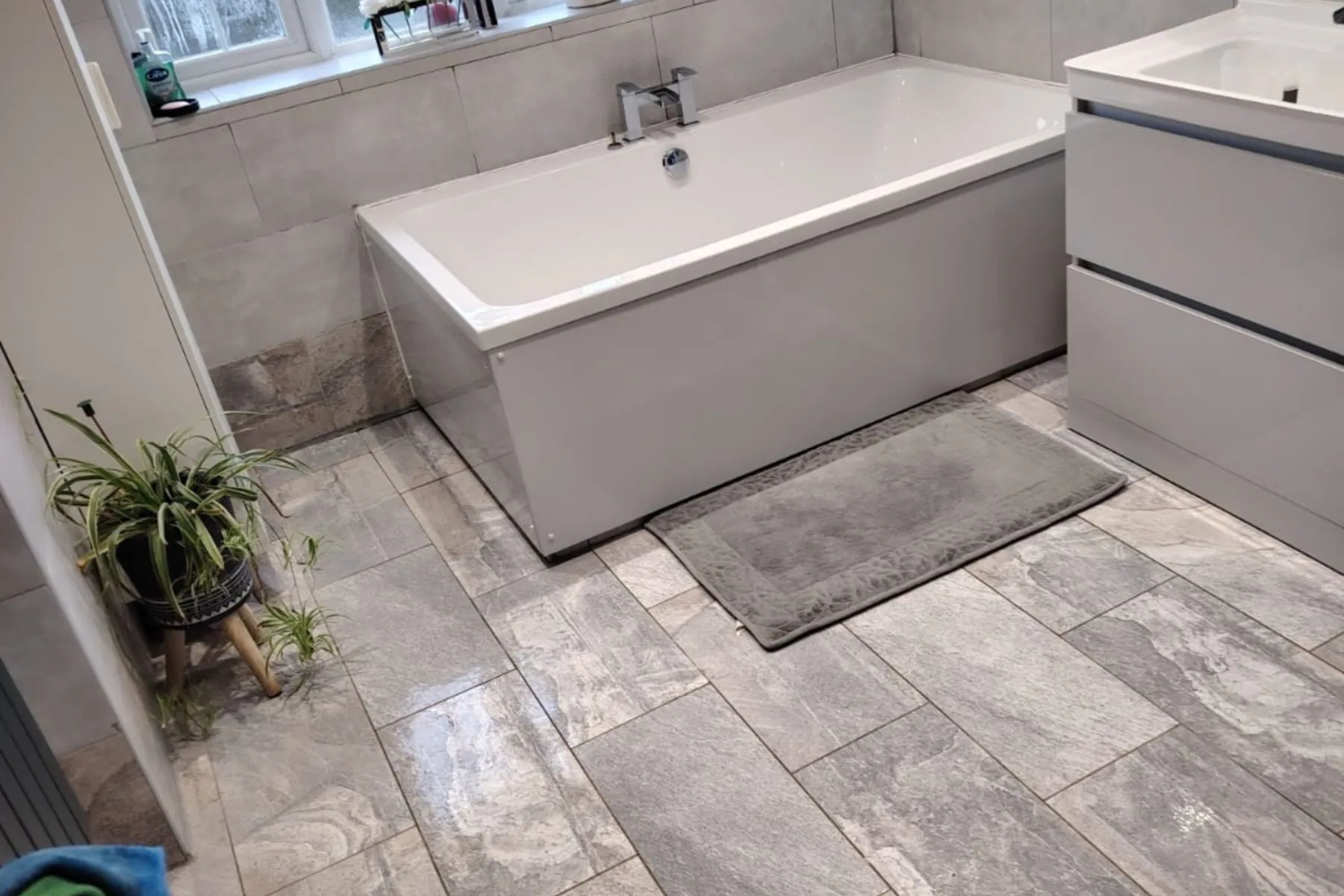
What that looks like is a soap film. It builds on shower screens, bath panels and tray surrounds, dulls a tiled floor, and shows as residue in a washing machine drawer and around the door seal. Detergent residue is itself a soil: slightly tacky, and good at catching whatever floats past. The fix is counter-intuitive, and it is less product with a proper clean-water rinse rather than a stronger cleaner. A limescale remover aimed at a soap film is the wrong chemistry and will not shift it.
Where do the hours actually go?
Oven interior, door glass, racks and runners, and the extractor filter above it
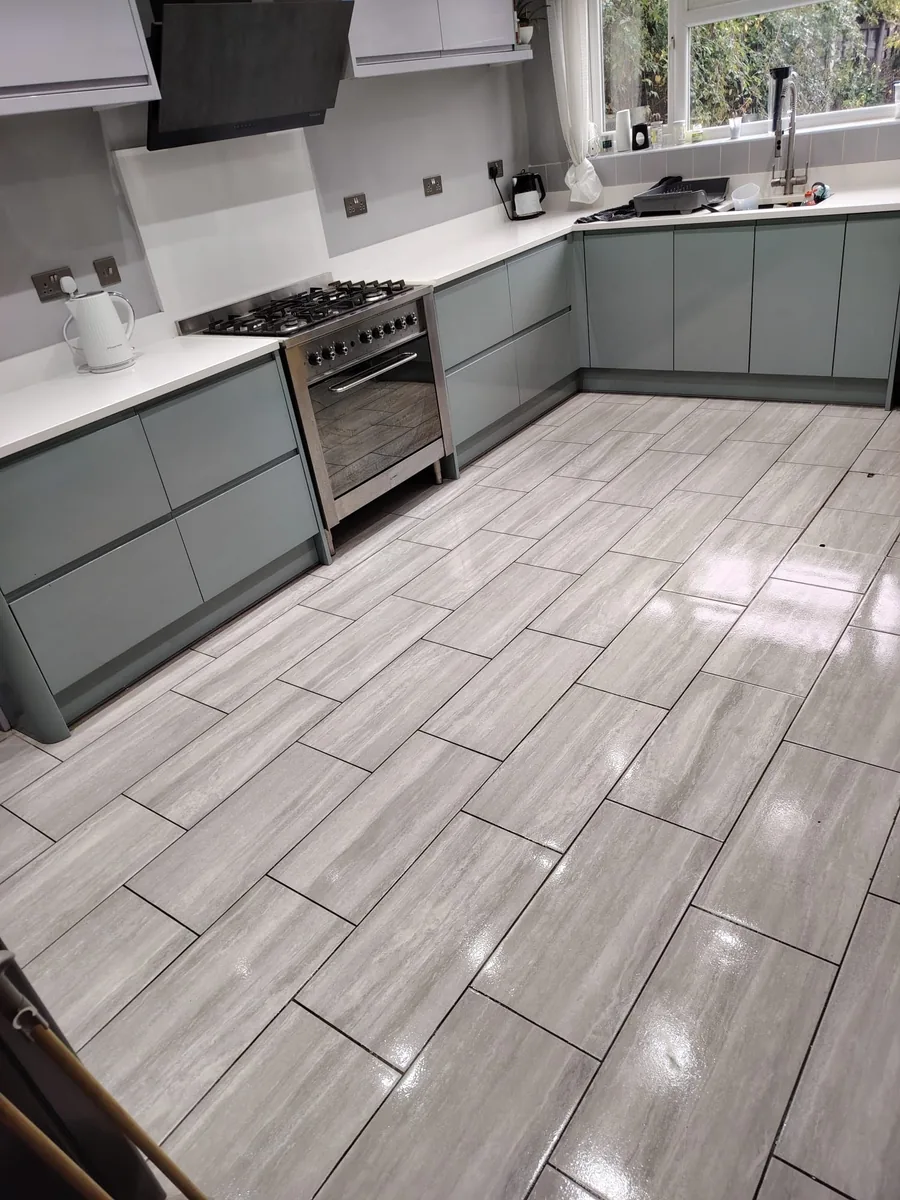
Grease on wall tiles, cupboard fronts and the tops of wall units
Fridge seals, the drip channel at the back of the fridge floor, and behind the appliances
Bathroom grout lines, shower screens, trays, the screen track and around the waste
Silicone sealant at the bath, tray and worktop junctions
Skirtings, door frames, the tops of doors, switches, handles and bannisters
Most of the rest of a deep clean moves faster than people expect. Those six lines separate a deep clean from a very thorough tidy, and they are the lines an inventory clerk checks too. The full room-by-room scope is in what a deep clean actually includes.
Why does grease need dwell time rather than effort?
Because it is not sitting on the surface, it has bonded to it. Cooking sends fat into the air as a fine aerosol, it lands on every cold surface in the room, and it then oxidises and thickens into a film that is tacky rather than greasy. That film traps dust and airborne soot, and each round of cooking adds a layer on top, so the tops of the wall units in a kitchen that has never been deep cleaned carry something closer to a varnish than a smear.
Removing it means breaking the film down chemically and giving the product time, not scrubbing harder. Scrubbing a bonded film moves it around and, on a painted cupboard front or a laminate, takes the finish with it. That is why a kitchen takes hours its floor area does not predict, and why the extractor is the item most often skipped by a cheap quote, since the metal mesh grease filter has to come out and be soaked rather than wiped. A charcoal filter is a replaceable part rather than a cleanable one, and that job is covered in kitchen grease and the extractor.
What does a shared house need that a family home does not?
Volume of use, and Birmingham has an unusual amount of it. Private renting reached 22.6% of households in the city at the 2021 Census, up 4.7 percentage points in a decade, and the University of Birmingham and Birmingham City University between them account for over 70,000 students. In the late-Victorian terraces around Selly Oak, six or seven people share one kitchen and one or two bathrooms, so grease, soap scum and grout staining accumulate several times faster than in a family house of the same age.
Sparkhill and Handsworth have the same problem in another form: a large bay-fronted villa subdivided into flats holds four or five kitchens, several bathrooms and a communal stair. Those communal areas are the part that gets neglected, because responsibility is split between everyone and belongs to nobody. It is also the part that is regulated. Birmingham operates mandatory HMO licensing for five or more occupants and, from 5 June 2023, a city-wide additional licensing scheme catching three and four occupant houses, and licence holders are expected to manage communal areas, cleaning and waste to a satisfactory standard. Check the current conditions with the council rather than with a cleaning company.
If the clean is pinned to a handover date, an inventory check or a deposit, that is a different product with a different scope, and booking the wrong one is a common and avoidable expense. The distinction is drawn in end of tenancy clean or deep clean.
What does the age of the house change?
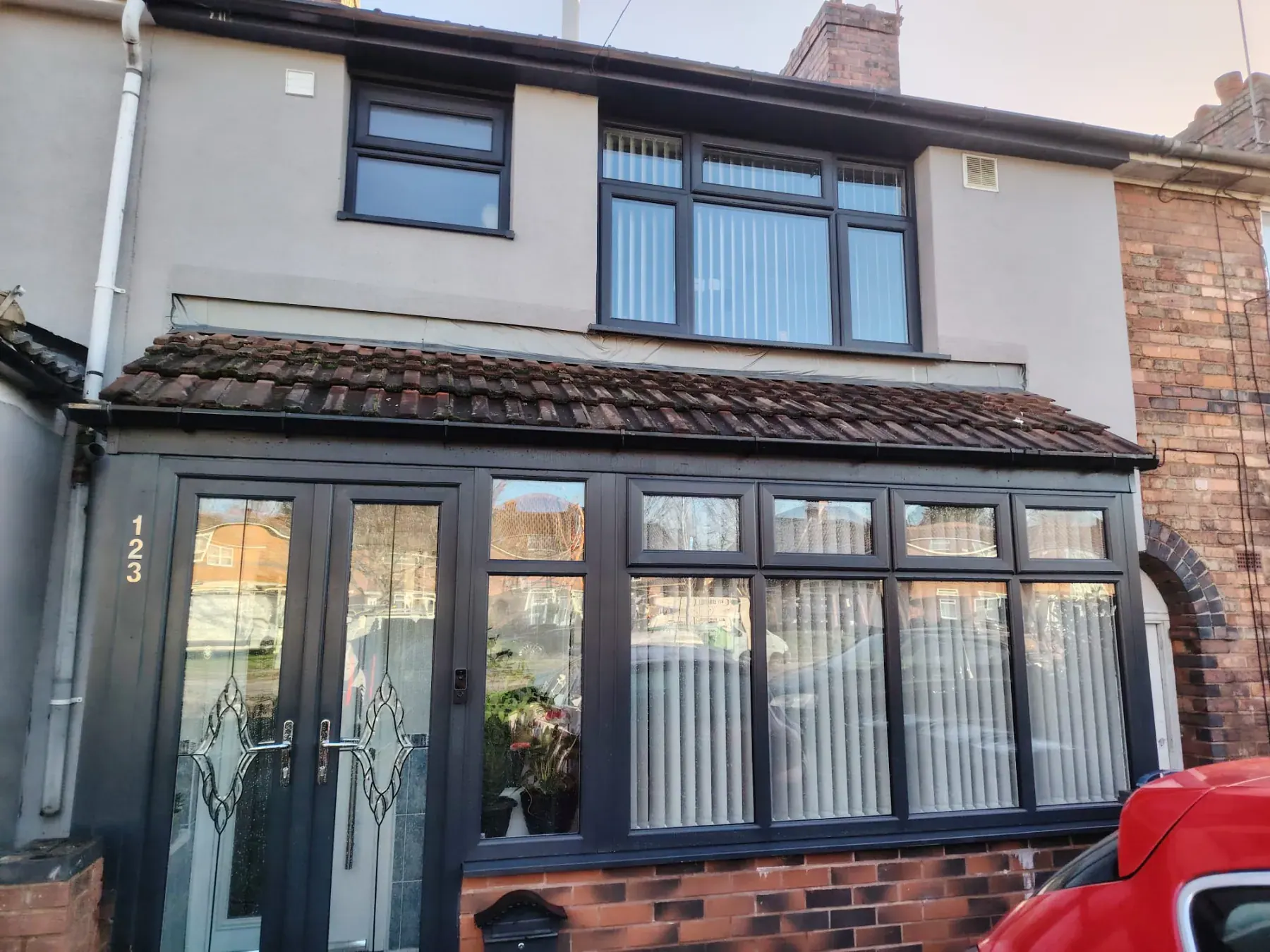
Detail, and there is a lot of it here. Terraced houses make up 27.8% of Birmingham’s stock at the 2021 Census, and semi-detached houses 35.6%. A late-Victorian terrace in Kings Heath, Bearwood or Moseley holds dirt in places a modern house does not have: deep skirtings, picture rails, panelled doors with a top edge nobody has touched, sash boxes, window reveals, floorboards with gaps between them and cast iron fireplaces. In houses subdivided into flats, a communal stairwell with turned spindles and a long handrail takes real time to do properly rather than wipe.
Interwar semis in Hall Green, Cotteridge or Weoley Castle are plainer inside: fewer mouldings, flush doors, and often a kitchen and bathroom fitted within the last twenty years. Larger period houses on the Calthorpe Estate in Edgbaston combine both, with modern appliance interiors and three storeys of Victorian joinery.
Why does the black mould keep coming back?
Because in most Birmingham housing it is a condensation problem rather than a dirt problem, and cleaning treats the symptom. Solid-wall terraces with no cavity, single-skin rear additions and bathrooms against a cold external wall all give warm, damp air a cold surface to condense on, and grout and silicone are porous enough to hold that moisture. The Department for Energy Security and Net Zero reported 876,000 Great Britain properties with solid wall insulation at the end of 2024, which is 10% of properties with a solid wall, so roughly nine in ten have no wall insulation and a cold internal surface to go with it.
The quantity of moisture involved surprises people. National Energy Action’s guidance on dealing with damp and condensation puts it at 30 to 40 litres a week added to the air by a family of four just by breathing, 15 to 20 litres from showering, cooking, bathing and washing, and 10 to 15 from drying clothes indoors. Totalling those three ranges gives roughly 55 to 75 litres a week that has to go somewhere. Building standards treat 80% relative humidity at the wall surface as the point at which mould can germinate, and BS 5250 notes that room humidity sustained above about 70% is enough to push a cold external wall past it.
None of that is a lifestyle failing, and it is worth being blunt because the opposite framing is everywhere. Government guidance from the health and housing departments is explicit: “We are absolutely clear that it is totally unreasonable to blame damp and mould in the home on ‘lifestyle choices’.” Cleaning removes the growth, and it returns on the same timescale unless something changes in the fabric or the ventilation. What helps is an extractor that runs on after the shower, a trickle vent that has not been painted shut, and keeping all rooms above 15 degrees, which National Energy Action gives alongside 18 to 21 degrees for living areas.
And the honest limit. Silicone that has gone black all the way through is finished. It can be cleaned and it will look better for a fortnight. Anyone offering to restore it on every visit is selling a subscription to a repair. It needs cutting out and replacing, which is a short job with a caulking gun and is worth doing before a deep clean rather than after, for the reasons in mould on silicone sealant.
What is worth doing before the cleaners arrive?
Clear surfaces and floors, because a deep clean is a clean and not a tidy
Replace any silicone bead that is black all the way through, so the new bead starts clean
Name the three things actually bothering you: the oven, the grout, the extractor, the room nobody has touched since the extension went on
Say how many bathrooms there are and whether the oven is in scope, since that is where the time is
Decide separately whether carpets are being cleaned, because extraction is a different machine with its own drying time
Sort out access and parking, and say if anybody needs to be in the house
When is a deep clean worth booking?
Before a house goes on the market, or before viewings start
After building work, when fine dust has settled into everything
Moving into a property somebody else has lived in
Once a year alongside a spring clean, so the kitchen and bathrooms never get far gone
When a regular routine has slipped and the baseline needs resetting
After the reset, a scheduled domestic cleaning visit holds the standard, which costs less over a year than deep cleaning the same house repeatedly. A deep clean sets a baseline and a regular visit maintains one; they are not substitutes for each other.
What is not worth paying for?
Descaling packages for a property inside Birmingham city, where the supply is normally soft and there is very little scale to remove
A hard-water routine copied from a London cleaning guide without checking which company supplies your postcode
Acidic scale products on marble, limestone or polished stone, where they etch the surface permanently
Repeated cleaning of failed sealant instead of replacing it once
Mould treatment sold as a permanent fix, when the moisture is coming from the building
A fixed price quoted without anyone asking about the kitchen and the bathrooms
A deep clean is worth booking when you can name what is wrong. Tell us that when you get in touch, along with the number of bathrooms and whether the property is occupied, and we will quote against it. The method and what changes the number are on our deep cleaning page, and you get a clear price and an estimated time before we begin rather than after.
Deep Cleaning in Birmingham: what we actually see
One thing worth knowing if you live in Birmingham city: it is normally supplied with soft water from the Elan Valley, so limescale is far less of a problem here than in the south of England. That is a claim about the city and not about the whole region. Cross into Sutton Coldfield, Walsall or Sandwell and you are on South Staffs Water instead, which is considerably harder, so a deep clean five miles up the road can be a genuinely different job.
What builds up in a Birmingham kitchen and bathroom instead is grease, soap scum and mould in grout and sealant. That is what a deep clean in the city is actually going after, and it is why the kitchen and the bathrooms take the bulk of the time. In heavily shared houses around Selly Oak the accumulation is dramatic; in family homes in Edgbaston or Kings Heath it is slower and no less real.
We do this work across Birmingham and the West Midlands. If you want the detail on how we do it and what it costs, see our
deep cleaning service,
or read about the areas we cover it in most:
Selly Oak, Edgbaston and Kings Heath.
Ready to see the difference?
Adefem Concepts Solutions Ltd. is insured, locally owned, and based in Selly Oak, Birmingham.