Harborne Window Cleaning for Painted Sashes and Deep Stone Sills
Window cleaning in Harborne is shaped by how much glass the houses carry, and by how high it goes. A bay-fronted villa off the High Street carries a great deal of glass across three floors, much of it in original sashes with glazing bars, and none of the upper part of it is reachable with anything a household keeps in the garage.
The other half of the work is quicker. The 1930s semis towards Quinton have wide uPVC bays and generous sills, and the newer infill near Harborne Park Road is straightforward modern glazing. Both suit a regular cycle of four to eight weeks, so a villa and a semi a few roads apart can be done on the same day. Exterior work needs nobody at home, so there is no need to stay in for it.
- Service
- Window Cleaning
- Area covered
- Harborne, B17
- Local authority
- Birmingham
- How we do it
- Pure water through a reach and wash pole, from the ground
- From our Selly Oak base
- About 10 minutes
- Price
- Quoted per property before we start (how quotes work)
- Booking
- Call or WhatsApp 07788 574283
Sap, pollen and second-floor glass under the street trees
Harborne glass gets dirty in a particular way. The mature street trees along Lordswood Road and the roads running off it drop sap and pollen through the summer and tannin-stained leaf litter in the autumn, and it lands on the top-floor glass first. Painted timber frames and deep stone or timber sills hold that grime and show it far more readily than a modern sealed unit does. Sashes make it slower again, because a six-over-six has many times the edge length of one pane. And on a three-storey villa the second-floor windows have often not been touched by anybody since the house was last decorated.
- Original sashes with glazing bars, carrying many times the edge length of a single sealed unit
- Second-floor glass on three-storey villas, well beyond any ladder a household should be standing on
- Deep painted timber and stone sills that hold grime and show it, in a way uPVC does not
- Sap, pollen and leaf tannin off the mature street trees on Lordswood Road and the roads around it
- Shopfront and first-floor office glass along Harborne High Street, done before the shops open
Working sash and bay glass from the pavement
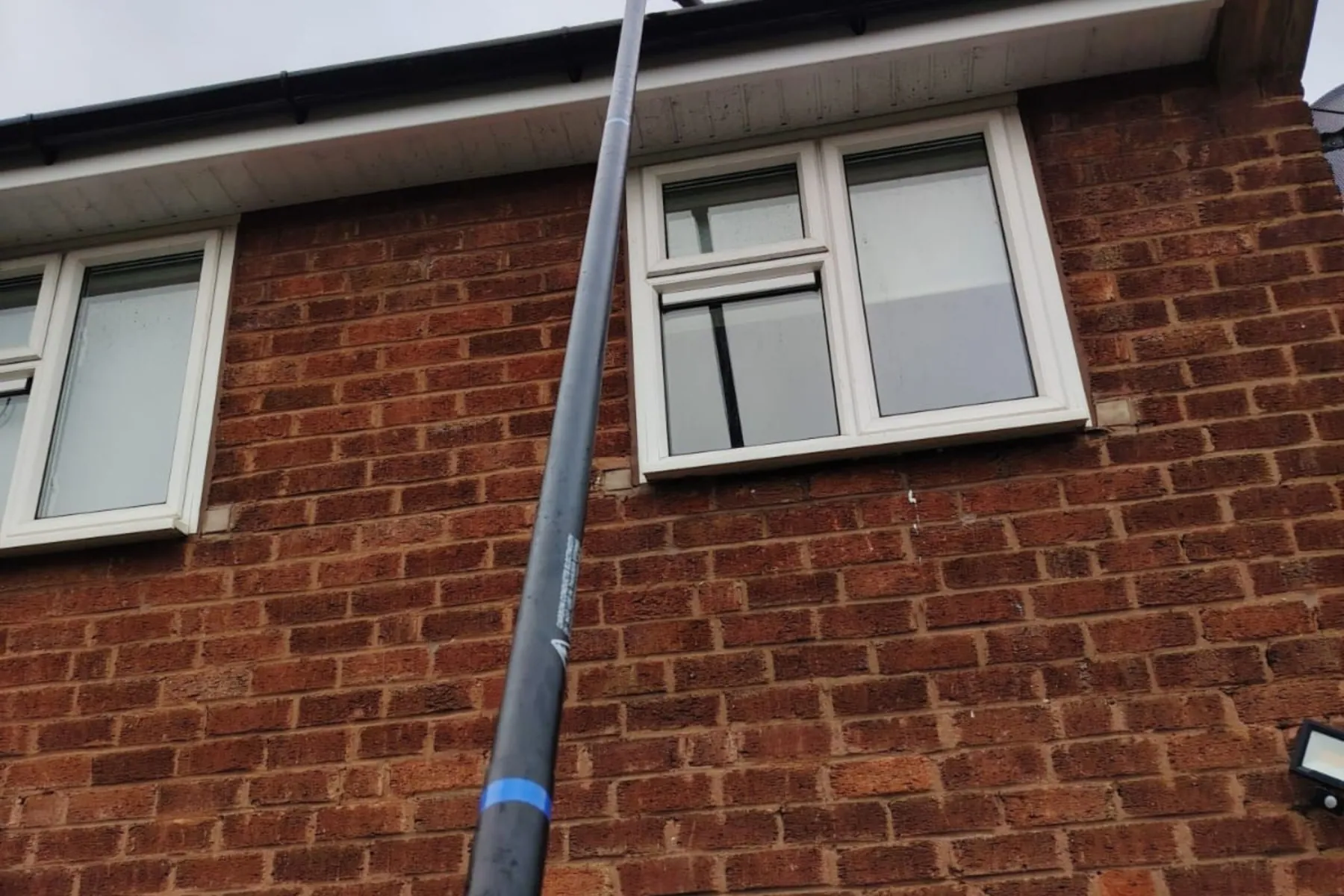
Everything is done from the ground with filtered, deionised water on a pole, reaching all three storeys, so nothing rests against cast-iron guttering, painted timber or a conservatory frame at the side of the house. On sashes we work along the glazing bars rather than sweeping across the whole opening, and pressure comes down for old glass and tired putty lines. Frames and sills are brushed with the pole as the glass is rinsed, and the ground-floor stone ledge under a bay is scrubbed by hand, because on these houses that is where most of the visible dirt actually sits. Pure water dries without spotting, so nothing is towelled off over old putty.
- Ground-based pole to three storeys, with nothing leaning on cast-iron guttering or a conservatory frame
- Worked along the glazing bars on sashes, at reduced pressure over old glass and tired putty
- Painted timber frames and deep sills brushed by the pole, and the ground-floor bay ledge scrubbed by hand
- Casement ironmongery and rebates wiped out, since those hold grit on an old timber window
More detail on the equipment and the order of work: how we do window cleaning, step by step.
How Harborne window visits are grouped
Regular B17 window cleans are booked on a four to eight week cycle, on the same weekday each time. The villa roads off the High Street, Lordswood Road, War Lane and Court Oak Road carry the most glass, and the semis towards Quinton and the newer houses around Harborne Park Road are quicker. A villa elevation takes roughly half as long again as the equivalent semi, and the booking allows for it. Summer is the heavier season here because of the sap. High Street shopfronts are done first thing, from 8am, before the pavement fills and while there is still somewhere to put the van.
What a glass-heavy villa adds to the quote
Price follows the number and type of windows rather than the size of the house, and Harborne villas are glass-heavy: a two-storey bay counts as several units, not one, and a second floor adds an entire elevation. Original sashes take noticeably longer than the replacement uPVC on the semi round the corner, and painted timber frames and deep sills need hand finishing that uPVC does not. A regular interval is what keeps that sensible, because at five weeks the glass has not built a whole season of sap and grit. A one-off after a year needs two passes and is priced accordingly.
Four to eight weeks, shorter under the Lordswood Road trees
Four to six weeks is the standard interval here and suits most B17 houses. Four is worth it if you sit under the street trees on Lordswood Road or back onto the golf course, where sap and pollen arrive faster than the calendar suggests. Six to eight weeks is fine for a sheltered semi with uPVC towards Quinton. Shopfronts on the High Street want fortnightly or weekly, because at pavement level they collect everything.
Overall satisfied with service this company has provided leaving windows & guttering clean.
Charles was great. He was very professional and did a great job.
Absolutely brilliant service. Adefem was professional, job well done. Everything was left beautifully clean, and I was genuinely impressed.
Harborne · Window Cleaning
Frequently asked questions
Yes. The pole reaches three storeys comfortably from the pavement or the garden, so there is no ladder against your cast-iron guttering, the bay roof or the render. If a house goes higher than three storeys, or a window sits behind something the pole cannot clear, the quote tells you, before anybody turns up to improvise.
Yes, at the pressure we use. The real risk on an old sash is scrubbing across perished putty and loose paint, which is why we work along the glazing bars and never towel the glass dry. If we find rot in a cill or putty that has gone, we photograph it and tell you, because that is a joinery repair for a joiner.
Because everything arrives from above. Sap, pollen and tannin off the street trees land on the second-floor glass first and are still there when the rain has rinsed the ground floor. That pattern runs right along the Harborne villa roads, and it is the main argument for a four or five week interval over a single annual clean.
Yes, by hand, and on a Harborne bay it is the part that changes how the house looks from the pavement. Those ledges collect grit and tannin and hold it in the weathered surface, so glass cleaned above a dirty ledge still reads as half done. Deep timber sills and the painted cills are brushed with the pole on the same visit.
Yes. Visits run within our published hours, and an 8am start usually clears a run of frontages before trading begins, with several units taken in the one visit. If your frontage has stall risers or a recessed doorway, tell us, because those hold more dirt than the glass does.
Other cleaning we do in Harborne
Tell us about the job
Send a few details or photos and we’ll come back with a clear price and an estimated time, with no obligation.