Window Cleaning
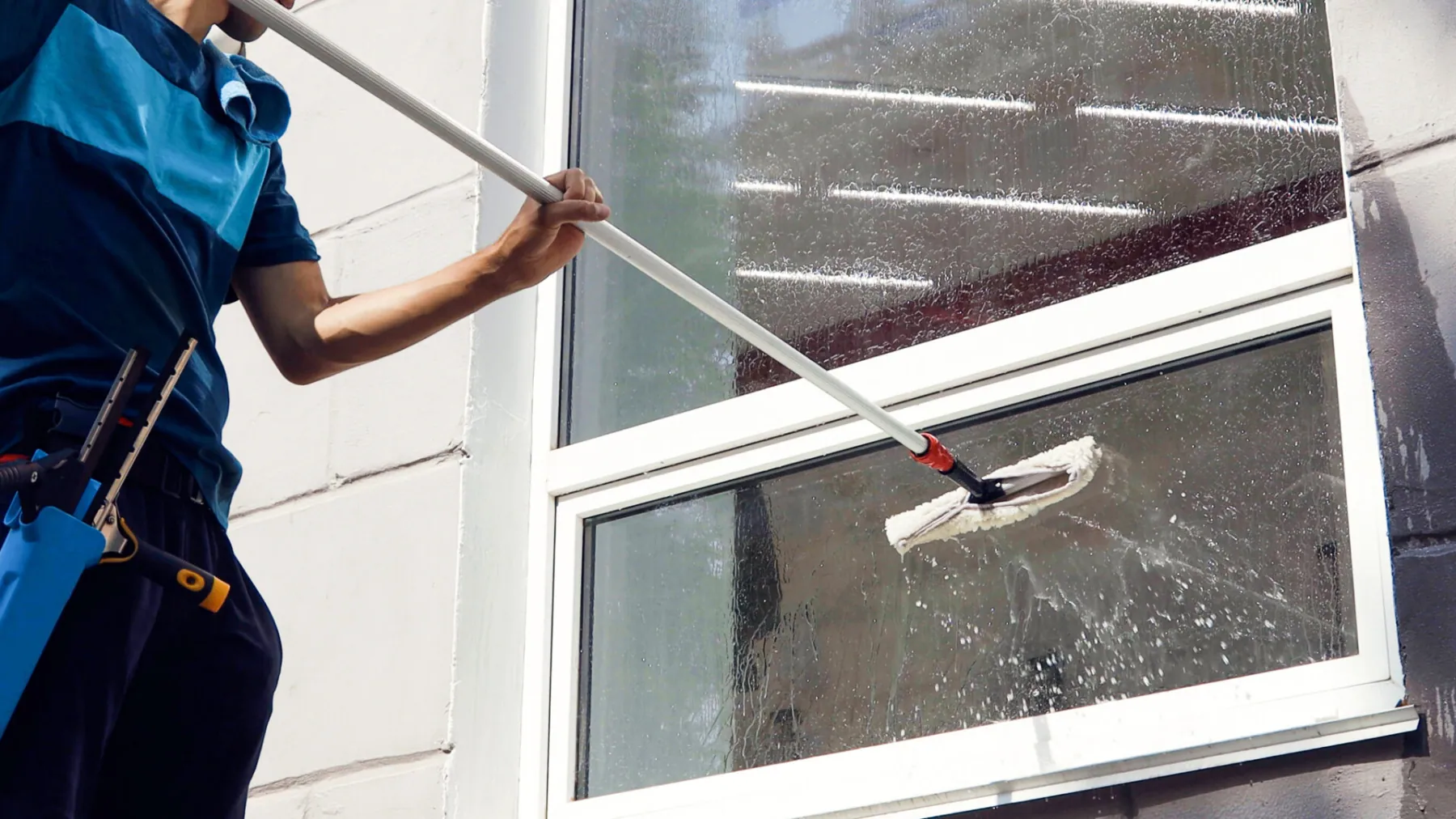
How Often Should Windows Be Cleaned?
Four to eight weeks is the usual interval, and the road decides where you sit in it. Traffic film, tree cover and aspect matter more than house size.
Read more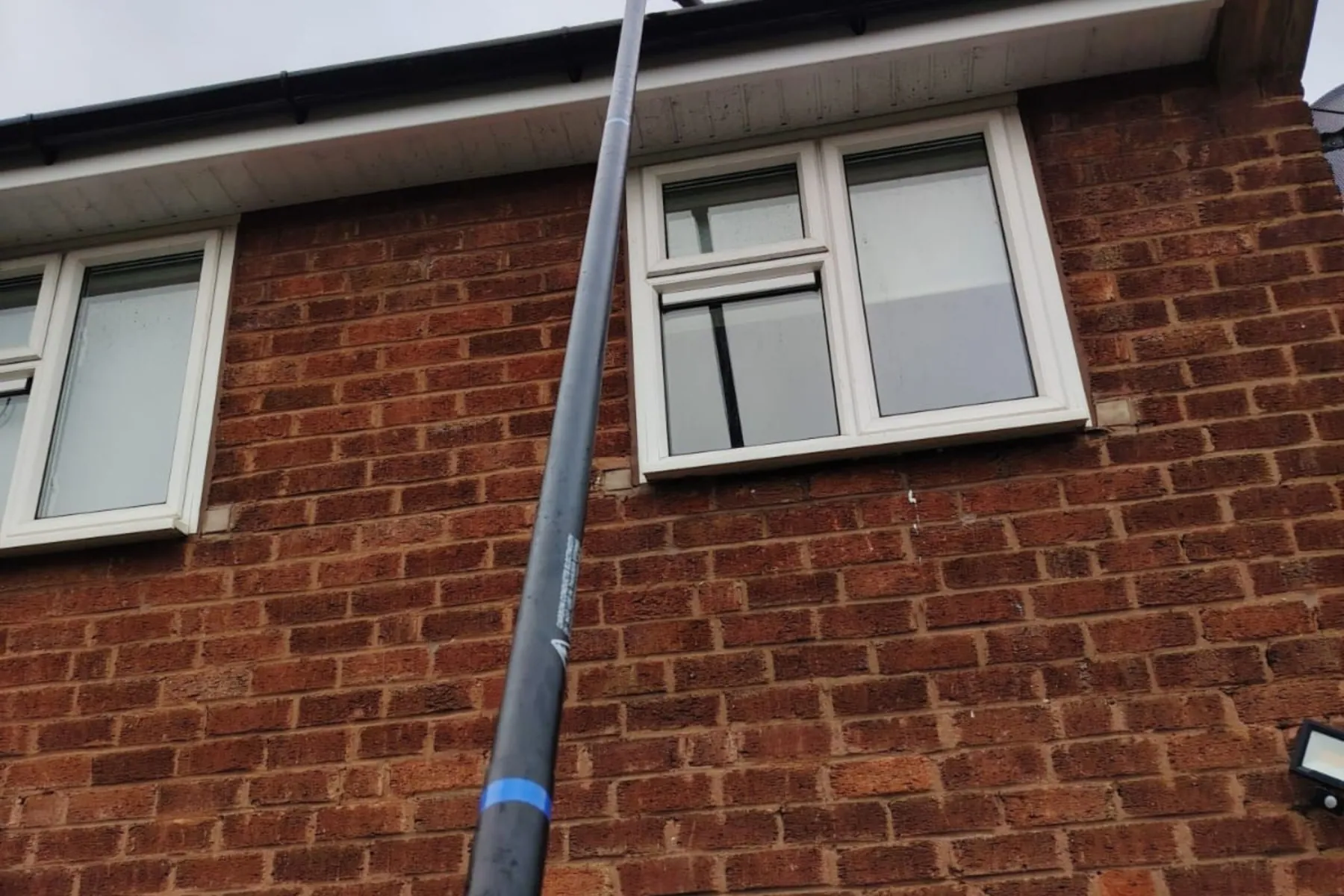
Professional window cleaning in Birmingham means the frames and sills get done as well as the glass. On a 1930s bay in Cotteridge or a small-paned casement in Bournville, most of the grime anyone notices from the pavement sits on the frame rather than the pane. Pure water on a reach pole cleans both, from the ground, with nothing resting on the render, the gutter or the sill.
More than in most cities, because the stock changes every few streets and the method has to change with it. A modern sealed unit is one pane and four edges. A small-paned Arts and Crafts casement in the Bournville village has many times that edge length in glazing bars alone, and edges are where dirt sits and where the minutes go. A 1930s bay in Cotteridge, Hall Green or Weoley Castle is a large area of glass over a wide sill that collects grit and is almost never wiped. A three-storey Victorian elevation in Edgbaston, Harborne or Olton is simply beyond anything a household owns.
Bournville adds a constraint on top of the glazing. Much of the village is a conservation area under Bournville Village Trust, with covenants covering external appearance, and the render is painted. That rules out anything which marks the wall, and in practice that rules out ladders.
Traffic film is greasy rather than dusty, and that is the whole reason rain does not deal with it. It is a fine mixture of combustion soot, brake and tyre particles and road oil, and the oily fraction binds the rest of it to glass and to white plastic. Water alone runs over the top of an oily film without lifting it, which is why a windscreen goes smeary in drizzle and a kitchen window looks worse after a wet week rather than better.
Frontages on the Bristol Road, the Hagley Road, Bearwood Road, the Coventry Road, the Soho Road, the Stratford Road through Shirley and the Quinton Expressway pick it up far faster than the quiet streets behind them. Peer-reviewed work on UK building stone has found that surfaces beside busier roads soil measurably faster through particulate deposition and microbial colonisation. No study has measured this specifically in Birmingham, but the city declared a city-wide Air Quality Management Area for nitrogen dioxide in 2005, with two stretches of the A38 corridor among the worst affected. On those elevations a four-weekly interval keeps the glass genuinely clear. At eight weeks you spend half the cycle looking through film.
Against that, a sheltered interwar semi with uPVC frames is comfortable at eight weeks, and six weeks is the sensible middle for most Birmingham houses.
Removing everything dissolved in the water before it ever touches the glass. Ordinary tap water carries dissolved minerals, and when a droplet evaporates on a pane those minerals stay behind as the spot you can see. Filtration and deionisation strip them out, which leaves water that dries off clean and also makes it a more aggressive solvent, because water with nothing dissolved in it takes dirt into solution readily. The glass is then left to dry rather than buffed, so there is no cloth, no chamois and no detergent leaving a residue of its own.
That is also why the method works identically across the whole area we cover regardless of the mains supply. Birmingham city is normally on soft Elan Valley water and Sutton Coldfield is on considerably harder South Staffs water, and neither figure changes the finish, because the water going up the pole has been through the filters either way. The equipment side of it, from the resin vessel to what a dissolved solids reading tells you, is in what pure water window cleaning does.
Yes, and on old joinery the changes all point towards doing less. On a casement the work goes pane by pane and along the glazing bars rather than sweeping across the whole opening, then the frames, sills and window ironmongery are finished by hand. On a box sash the pressure comes down: the putty line holding the glass is often original and brittle, the glass itself is thin and slightly uneven, the meeting rail between the two sashes traps grit, and the parting bead and staff bead are painted softwood repainted a dozen times.
Painted timber frames and sills need hand finishing that uPVC does not, and on a period frontage they carry most of the visible grime, so cleaning only the glass leaves the elevation looking half done from the street. Working a terrace frontage, including what to do about a sash that has been painted shut, is covered in cleaning sash windows in a Victorian terrace.
Two things are deliberately not on that list. Interior glass needs somebody at home, takes longer on small panes and is slower upstairs, so it belongs in its own quote. Conservatory roofs are a different method and are not part of a window clean.
Because a neglected frame keeps shedding. uPVC and aluminium frames have drainage channels and weep holes along the bottom, and on a window left for years those channels hold a wet silt. Cleaning disturbs it, and for a week or two afterwards each shower washes a little more down the pane in streaks. That settles by the second visit, and it is a sign the frames were actually cleaned rather than a sign they were not.
A first clean also reveals things that were always there. Misting between the panes is a failed sealed unit and no cleaning reaches it. Fine scratching, etching from a garden sprinkler and paint speckle left by a decorator are all in the glass rather than on it. Anyone quoting a clean that promises to remove those is describing a different trade.
Usually yes, and it is the job with the most obvious before and after. Across Northfield, Weoley Castle, Kingstanding and the right-to-buy stock generally, uPVC windows, fascias and soffits fitted from the 1980s onwards go grey on the weather side and green on the shaded side, and almost nobody cleans them. Taking the film and the algae off recovers most of the difference, and doing the fascia and soffit at the same time changes an elevation more than the glass does.
The honest limit is that plastic which has genuinely oxidised, chalky to the touch and dull all the way through, will not come back to white with cleaning. The surface itself has degraded under years of ultraviolet light, and the chalk comes off on your hand because it is the material rather than a deposit. That is a restoration or replacement job, and anyone quoting a clean that reverses it is describing a different service.
Because of what the ladder rests on. Ladder feet mark painted render, which matters across the Bournville village and the render frontages of Kings Norton and Old Yardley. Ladder tops distort original cast iron guttering and press on ageing plastic runs. Planting grown up to the walls on the larger plots in Sutton Coldfield and Solihull leaves nowhere flat to foot one, and the plots sloping down towards the canal in Yardley Wood give uneven footings.
The safety arithmetic is the other half. The Health and Safety Executive is clear that ladders are not banned and can be sensible for short, low-risk work, so this is not a rule anybody is breaking. It is a preference informed by the fact that falls from a height remain the most common cause of work-related death in Great Britain, at 31 of the 126 worker fatalities in HSE’s provisional 2025/26 figures. A water-fed pole reaches three storeys from the ground and none of it arises.
Through whatever is there, which is why it is worth answering before booking rather than on the day. Terraced streets across Selly Oak, Kings Heath, Bearwood and Sparkhill are reached at the rear through a shared entry between two houses, a gated passage that may belong to the neighbour, or the house itself. Each changes the setup and the timing rather than whether the job can be done, and a visit arranged around somebody being in is a different commitment from one that is not.
Where there is genuinely no route to the back the options narrow but they do not disappear, and they are set out in cleaning a terrace with no side access. Interwar semis are the easy case: a side driveway means the whole perimeter is worked in one visit without anybody going through the house.
Annual cleaning is possible on any of them, and it is poor value on small-paned or period glazing, because each visit becomes a recovery rather than a clean and is priced accordingly. The trade-off between interval and cost per visit is worked through in how often windows should be cleaned, and it is a genuine decision rather than a sales question.
The full method, from filtration to what happens on a three-storey elevation, is on our window cleaning page. Tell us the property type, the number of storeys, whether the frames are timber or uPVC and how the rear is reached, and you get a price before we start rather than after.
Birmingham housing gives window cleaning more variety than most cities, and the method has to change with it. Victorian bays and sashes in Selly Oak and Harborne, small-paned Arts and Crafts casements in the Bournville village, 1930s bays with wide sills in Cotteridge and Hall Green, weathered uPVC in Northfield, and three-storey elevations in Edgbaston and Solihull. None of those is a harder job than the others. They are different jobs, and a price set as though they were the same one will be wrong for most of them.
The other local factor is traffic. Front elevations on the Bristol Road, the Hagley Road and Bearwood Road pick up traffic film far faster than a quiet side street a hundred yards behind, and they need a shorter interval between cleans, closer to four weeks than eight. Same house, same glazing, different road, genuinely different rate of soiling.
We do this work across Birmingham and the West Midlands. If you want the detail on how we do it and what it costs, see our window cleaning service, or read about the areas we cover it in most: Selly Oak, Harborne and Bournville.
Adefem Concepts Solutions Ltd. is insured, locally owned, and based in Selly Oak, Birmingham.
Keep reading
Four to eight weeks is the usual interval, and the road decides where you sit in it. Traffic film, tree cover and aspect matter more than house size.
Read more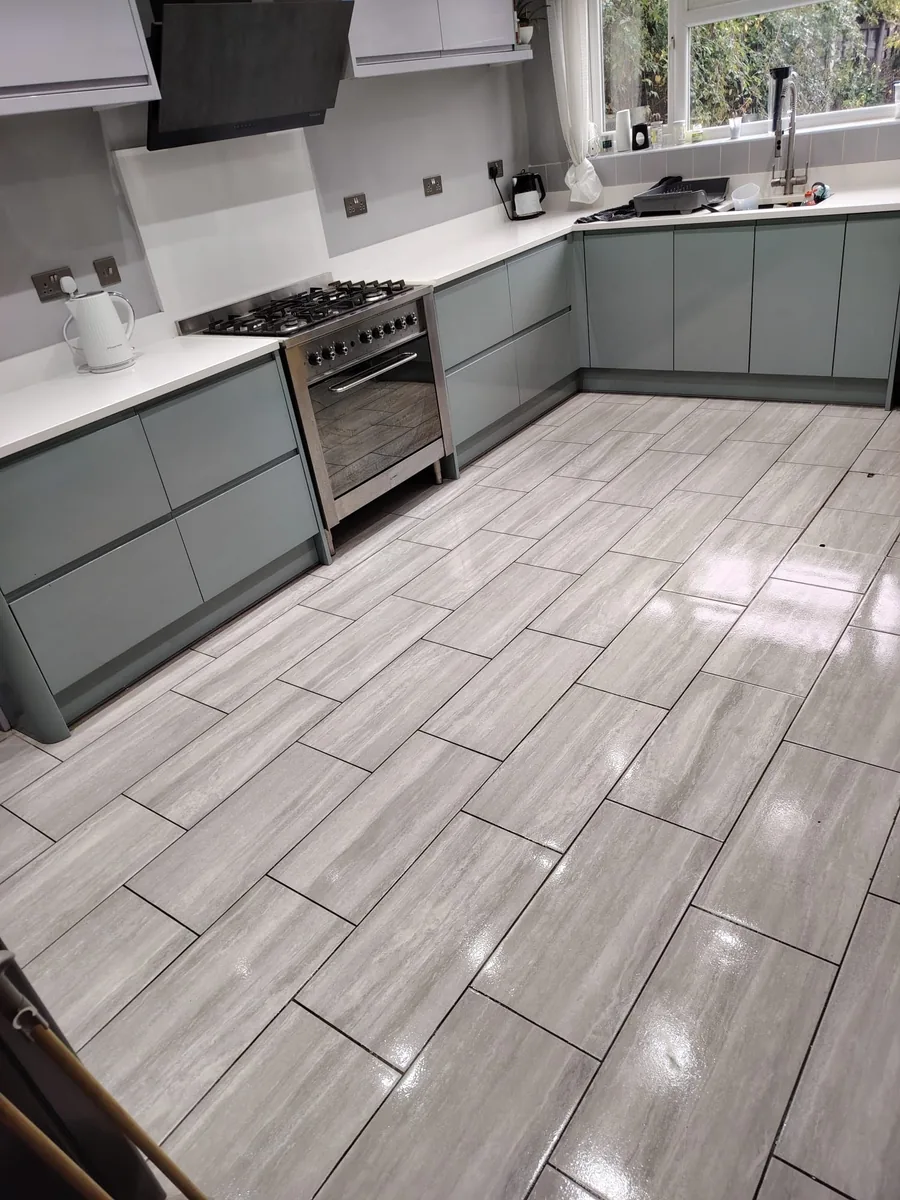
The full scope room by room, including the jobs that are not in a deep clean as standard: carpets, upper windows, lofts, clearance and any repair.
Read more
Cast iron rusts from the inside out under wet silt. Ogee and half-round, bolted joints, parapet gutters, and why a ladder costs you the fall.
Read moreSend a few details or photos and we’ll come back with a clear price and an estimated time, with no obligation.