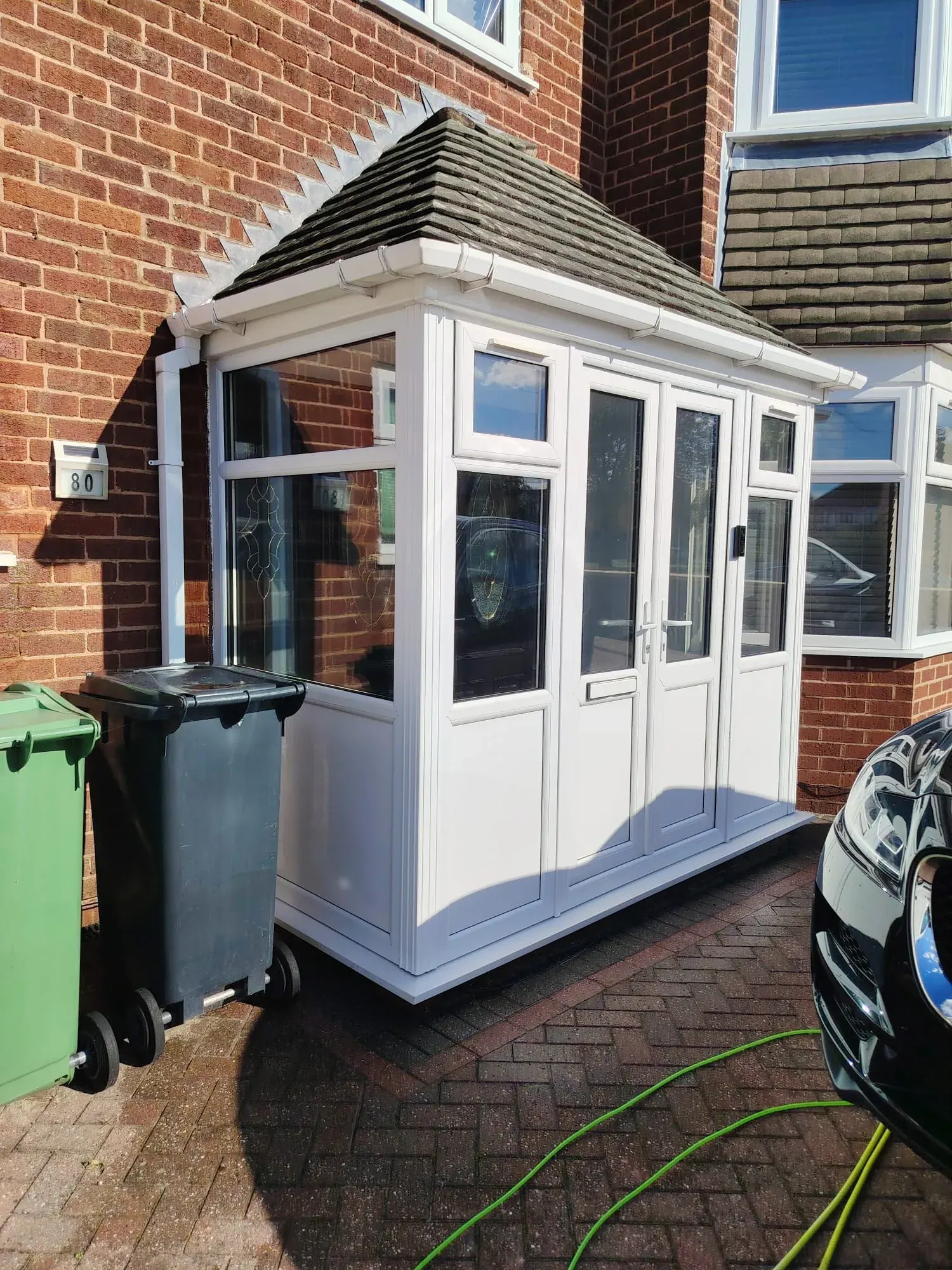
Driveway and Patio Cleaning in Brandwood End, Moss Out of the Joints
Front gardens on these semis were mostly given up for parking somewhere between the 1970s and last year, so the area is full of driveways: block paving, a good deal of concrete, some tarmac and the occasional run of slabs. That makes drive cleaning one of the main outdoor jobs in B14.
The local complication is the canopy. Under the cemetery trees and the street trees a block drive never properly dries, and moss establishes down in the sand joints instead of as a film across the face of the blocks. A pressure wash sweeping over the top looks superb for about six weeks and then it is back, because the growing part of it was never removed. Working the joints out, and re-sanding afterwards where they need it, is the actual job here.
- Service
- Patio & Driveway Cleaning
- Area covered
- Brandwood End, B14
- Local authority
- Birmingham
- How we do it
- Rotary flat surface cleaner at a pressure the surface can take
- From our Selly Oak base
- About 18 minutes
- Price
- Quoted per property before we start (quoting and booking questions)
- Booking
- Call or WhatsApp 07788 574283
Shade, damp and moss in the joints of a Brandwood End drive
Shade and damp do all the work. North-facing frontages on the interior streets see very little winter sun, and those under the cemetery trees see less again, so algae blackens the blocks while moss fills the joints between them. Leaf litter left down over winter stains as it rots, and tannin on concrete goes a colour people regularly mistake for spilt oil. Rear patios have the same problem under worse conditions, enclosed by fencing and mature garden planting. And the drive matters to a seller, because it is the first thing in every photograph.
- Block paving under the cemetery and street-tree canopy, with moss rooted down in the sand joints
- North-facing frontages on the shaded interior streets, blackening with algae through winter
- Leaf tannin staining concrete and slabs where litter has been left down through the wet months
- Rear patios enclosed by fencing and garden planting, damper again than anything at the front
- Pre-sale bookings, where the drive is the first thing an agent’s camera points at
Block, concrete or tarmac: checking the surface before the rotary head
We establish what the surface actually is before anything runs, because a 1930s frontage might be block paving from 2015, original concrete, or tarmac that will not take a rotary head at all. Sound block and concrete get rotary cleaning at a controlled distance. The joints are then worked out properly, not skimmed, with the root taken as well as the top growth, and where the joints need it, re-sanding with kiln-dried sand once the drive has dried out is quoted separately at the start. Silt is collected and carried away instead of being flushed into your gully.
- The surface identified first, since tarmac and older concrete will not take what block paving will
- Joints worked out to the root, because that is where the moss lives on a shaded drive here
- Kiln-dried sand replaced once the paving has dried, quoted separately where the joints need it, or the blocks loosen and the moss returns faster
- Silt collected off the drive, never washed into the gully your downpipe uses
More detail on the equipment and the order of work: the full patio & driveway cleaning process.
Drives, and the first thing in the photographs
Drives needing this are spread right across the area, heaviest on the streets nearest the cemetery and on the shaded interior roads. Conditions suit the work: hard standing to set up on, an outside tap usually within reach, and enough room to run hoses without crossing a public pavement.
Joint work, not washing, is what a long-neglected B14 drive costs in time
Area, surface and how long it has been left set the number, and here the joint work takes the time, far more than the washing. A drive done every couple of years is quick. One carrying fifteen years of moss rooted in the joints under a tree is most of a day, and the quote says so. Re-sanding, where the joints need it, is quoted separately at the start so nothing is added afterwards. Rear patios cost a little more per square metre than the front, because everything is carried through a side gate by hand.
Every spring under the cemetery canopy, every two years in the open
Every year on a drive under the cemetery canopy, and spring is the moment, once the winter growth has shown itself but before the house goes on the market. Two years is realistic on an open, sunnier frontage away from the trees. Rear patios follow the front, and if anything want it slightly sooner. Sweeping the leaves off before winter, not in March, does more for a Brandwood End drive than anything we can sell you.
Absolutely brilliant service. Adefem was professional, job well done. Everything was left beautifully clean, and I was genuinely impressed.
Charles was great. He was very professional and did a great job.
Great services delivered by Charles recommend for others
Brandwood End · Patio & Driveway Cleaning
Frequently asked questions
Because the growth is in the joints, not on the blocks. A wash across the surface takes the green off the top and leaves the roots sitting in damp sand a few millimetres down, and under the tree canopy here that regrows within weeks. The joints have to be worked out and then re-sanded. It costs more than a wash over and it is the only version that lasts a season.
No, it is quoted separately when the joints need it, and on a drive cleaned down to the root they usually do. Cleaning block paving properly takes the kiln-dried sand out of the joints, and without it replaced the blocks work loose under a car and the moss finds bare joints to colonise. We let the paving dry and then re-sand it, with the figure set out in the quote from the start.
No, not the way block paving is done. A rotary head at working pressure lifts the surface aggregate off tarmac and leaves it looking worse permanently. Tarmac gets a chemical treatment and a low-pressure rinse, which takes the algae and the green without stripping it. We check what we are standing on before anything is switched on, precisely so this does not happen.
Usually not. Leaf tannin staining is very common on the cemetery-side streets and it goes a deep brown-black that reads like oil from a distance. It responds well to treatment. Engine oil that has been soaking into porous concrete for years lightens a long way without ever going altogether, and we say which of the two you have once we have looked.
A week or two before the photographs, once the weather has settled. That gives the drive time to dry and, where the joints were re-sanded, for the sand to settle, so it looks finished in every picture. Before a sale the drive is the first thing the agent’s camera points at.
Other cleaning we do in Brandwood End
Tell us about the job
Send a few details or photos and we’ll come back with a clear price and an estimated time, with no obligation.