Gutter Cleaning
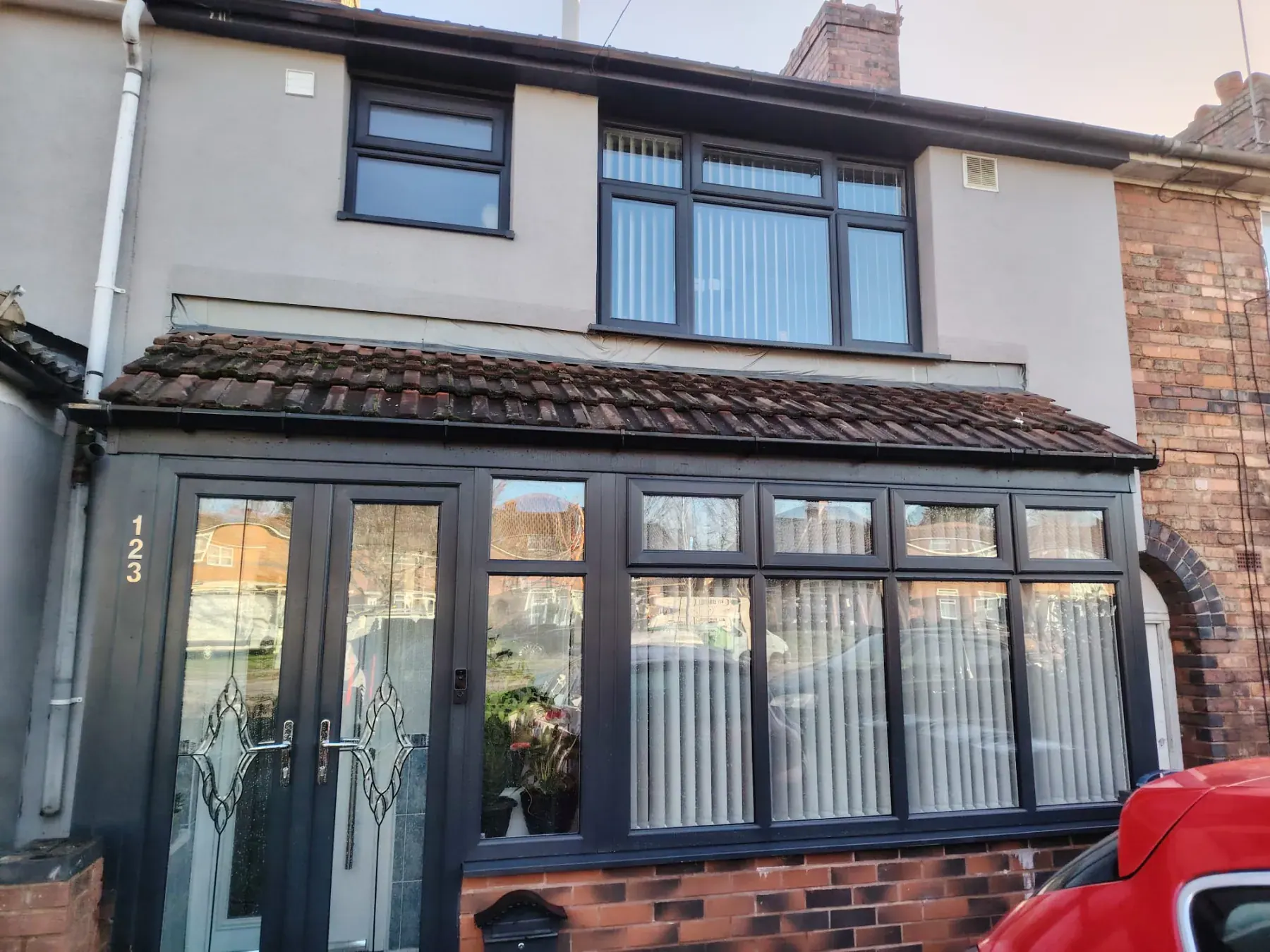
Cast Iron Gutters on Victorian Housing
Cast iron rusts from the inside out under wet silt. Ogee and half-round, bolted joints, parapet gutters, and why a ladder costs you the fall.
Read more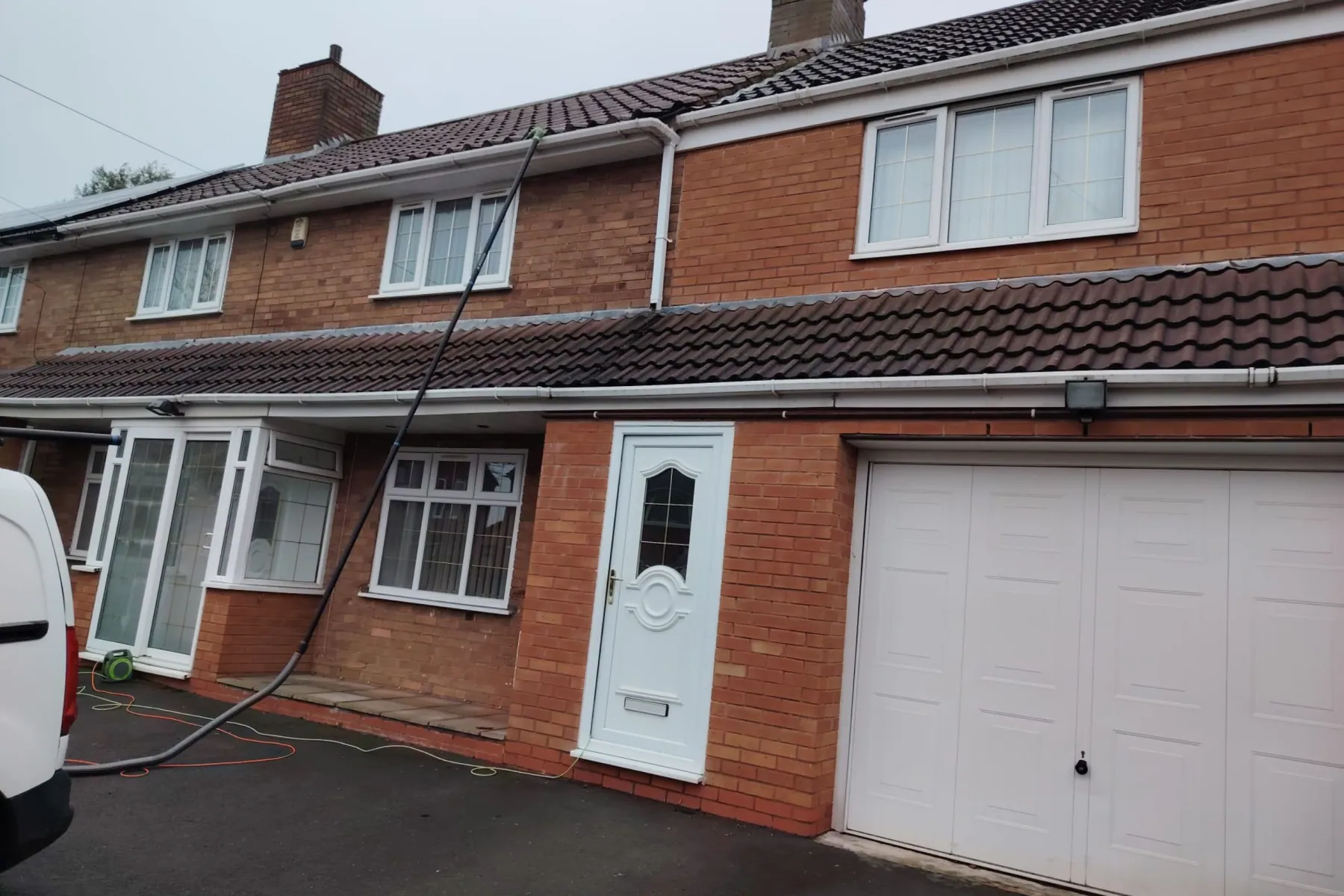
Ladders are not banned, and the Health and Safety Executive says so in terms on its own myths page. What the law asks is whether a ladder is the right equipment for the particular task in front of you. For gutter cleaning it usually is not, and the reasons have nothing to do with regulation. They are about the shape of the job.
No. The HSE lists “HSE have banned the use of ladders on building sites” on its page of common work at height myths and states that ladders and stepladders can be a sensible and practical option. The myth is persistent enough that it gets used as a sales line by people selling other equipment, which is worth knowing when you hear it.
The second myth on the same page is about qualifications. You do not need to be qualified to use a ladder. You need to be competent, which the HSE describes as having the skills, knowledge and experience to use it properly. A certificate is not the test and nobody can require one of you. That cuts both ways: it also means a laminated card in a van window proves considerably less than people assume.
They do not ban any piece of equipment by name. They set an order of preference. Avoid work at height where the job can reasonably be done another way. Where it cannot, use equipment that prevents a fall. Where a risk of falling remains, use equipment that reduces the distance and the consequences of one. Ladders sit near the bottom of that order, permitted where other equipment is not justified because the work is low risk and of short duration, or because of features of the site that cannot be altered.
Short duration is where the misquoting starts. The HSE glosses it as no more than 30 minutes at a time. That figure is HSE guidance rather than a statutory limit, so anyone telling you the law sets a 30-minute ceiling has misread it, and anyone telling you 29 minutes on a ladder is therefore compliant has misread it in the other direction. The test is the whole assessment, not the clock.
One more point of accuracy. These are workplace regulations. They bind employers, the self-employed and anyone controlling the work of others. They do not directly govern you cleaning your own gutter on a Saturday afternoon. The physics is unaffected by that distinction.
The HSE published Work-related fatal injuries in Great Britain, 2026 on 1 July 2026, covering data to March 2026. It records 126 workers killed in work-related accidents in 2025/26, of which 31 died in falls from a height. That is roughly a quarter of all worker deaths and it is the single most common kind of fatal accident. Those 2025/26 figures are provisional; the HSE finalises them in July 2027.
The pattern is not a one-year artefact. The same release notes that falls from a height have been the main cause of work-related fatal injury in almost every year going back to 2001/02. Across the most recent five-year period the average is 37 deaths a year from falls, 28% of worker fatalities, and in construction specifically falls accounted for over half of all deaths over that period. On the non-fatal side, falls from height were 8% of the injuries reported under RIDDOR in 2024/25.
Two honest caveats. These are work figures, and a householder who falls off a ladder at home is not reported under RIDDOR at all, so this dataset says nothing directly about domestic risk in either direction. And the numbers cover all falls from height, not gutter work specifically. What they establish is narrower but still useful: falling off things is the way people are most often killed at work in this country, and it has been for a very long time.
Because gutter cleaning breaks almost every condition that makes a ladder safe. It is not one failure mode, it is six at once.
Reaching sideways is the one that catches experienced people, because a ladder gives no warning. It feels entirely solid until the foot slides, and by then there is nothing to be done about it. A ladder stay or standoff solves the resting problem, and it also makes the ladder longer, heavier and more awkward to place, which pushes people back towards leaning on the gutter.
They fail in opposite ways from the same cause. Cast iron on the Victorian stock is hung on brackets and set to a shallow fall towards the outlet. A ladder puts a concentrated point load on a run designed for the distributed weight of water. The bracket bends or its fixing pulls in the fascia timber, the run drops, and the fall is gone permanently. What you are left with is a low point that holds standing water, which is exactly the condition that rusts a cast iron gutter out from the inside.
Plastic runs fitted from the 1980s onwards, which covers most of the post-war estates and a great many replacement runs in Harborne and elsewhere, go brittle with UV age. Clips crack, a section pops out of its bracket, and a hairline split at a union is invisible from the ground and leaks for years. There is a third casualty as well: ladder feet mark painted render, and on a render frontage that mark does not clean off afterwards.
A ground-based pole vacuum with a camera at the head clears a run to three storeys with nothing resting on gutter, fascia or render, and the operator stays on the ground the entire time. That is the case for it, and it is a strong one. The limits are equally worth stating.
When the job stops being clearance and becomes work. Parapet gutters and hidden valleys on three-storey villas, anything above three storeys, resealing joints, rehanging a run that has lost its fall, replacing fascia and soffit, and any situation where somebody has to be on the roof to see what is happening. Those need a roofing contractor with proper access equipment and the assessment that goes with it.
If that is what your building needs, the right answer is not us with a longer pole. We would rather tell you that and lose the booking than take money for a visit that cannot fix your problem. The same applies to the large detached stock around Sutton Coldfield and Solihull, where a complicated roof outline sometimes puts one section beyond what any ground-based method reaches.
The insurance point is not paperwork for its own sake. If somebody falls on your property, or a ladder goes through a conservatory roof, the question of who carries that is settled by whether the person working there was insured. It is a fair thing to ask and nobody legitimate minds being asked.
The practical summary is short. Ladders are legal, sometimes sensible, and badly suited to this specific task. If you are going to do your own gutters on a single-storey extension from a properly footed ladder with somebody at the bottom, that is a defensible decision. Two and three storeys is not the same decision. Tell us the storeys, the guttering material and how the back is reached, and we will give you a price and an estimated time for ground-based gutter clearance before we start rather than after. If you are still deciding whether anything is blocked at all, the diagnosis can be done from the pavement.
Harborne in B17, Sutton Coldfield across B72 to B76 and Solihull in B91 to B93 are the areas where this question matters most, for a straightforward reason: the houses are larger, a lot of them are three storeys or have a raised rear elevation, and there is usually a ladder in the garage. Substantial detached houses on mature plots around Four Oaks and Mere Green sit under real tree cover, so the gutters fill, and the person who would rather not pay somebody looks at the ladder.
The plots themselves are part of the problem. Mature planting grown up to the walls leaves nowhere flat to foot a ladder, gravel and lawn are poor footings, and the run on a three-storey elevation is a long way above a hard landing. The honest position is not that ladders are forbidden. It is that gutter work is close to the worst possible task to be doing off one.
We do this work across Birmingham and the West Midlands. If you want the detail on how we do it and what it costs, see our gutter cleaning service, or read about the areas we cover it in most: Harborne, Sutton Coldfield and Solihull.
Adefem Concepts Solutions Ltd. is insured, locally owned, and based in Selly Oak, Birmingham.
Keep reading
Cast iron rusts from the inside out under wet silt. Ogee and half-round, bolted joints, parapet gutters, and why a ladder costs you the fall.
Read more
Gutter cleaning is not priced by bedrooms. Height, run length, access and how full it is set the number. Every variable, so you can read your own quote.
Read more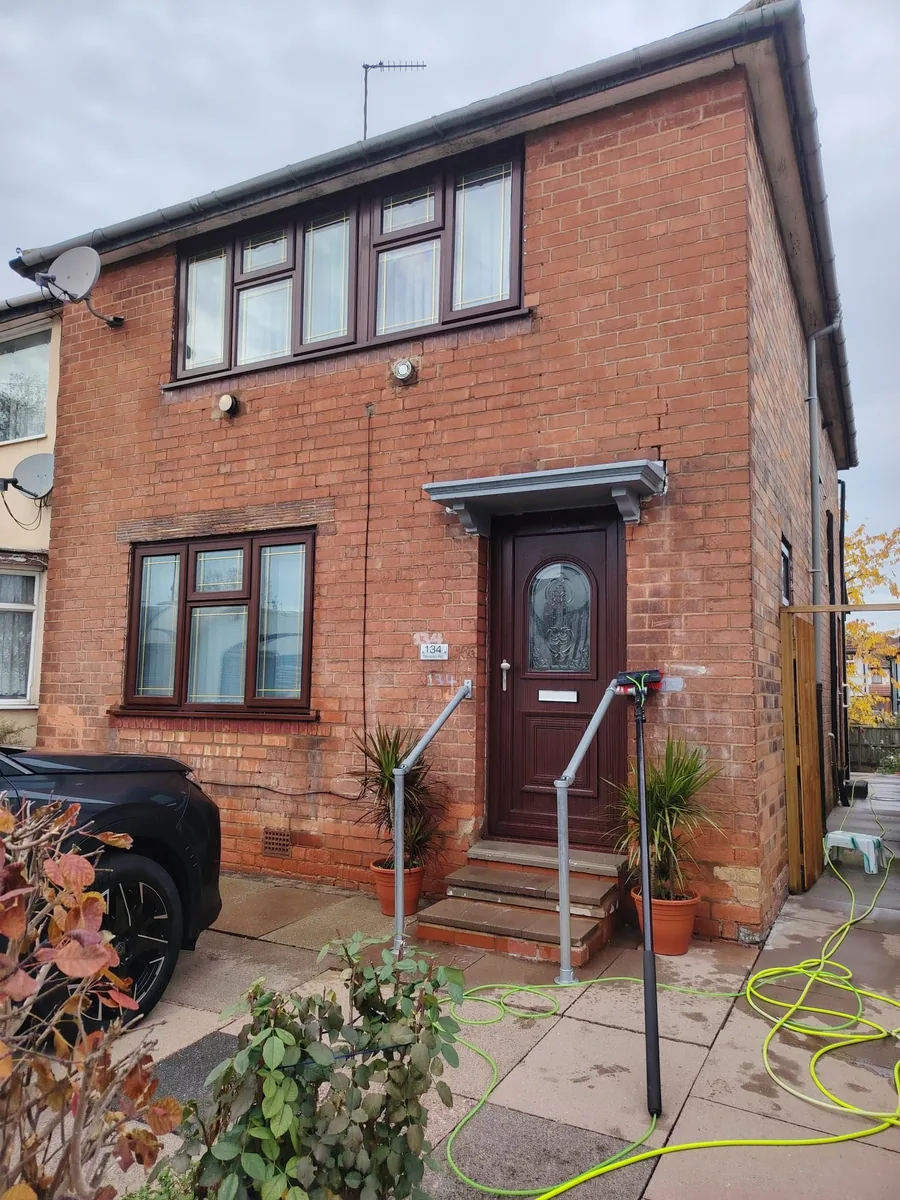
A gutter that overflows along its length is blocked. One that overflows at a single point usually is not. How to tell from the pavement, in the rain.
Read moreSend a few details or photos and we’ll come back with a clear price and an estimated time, with no obligation.