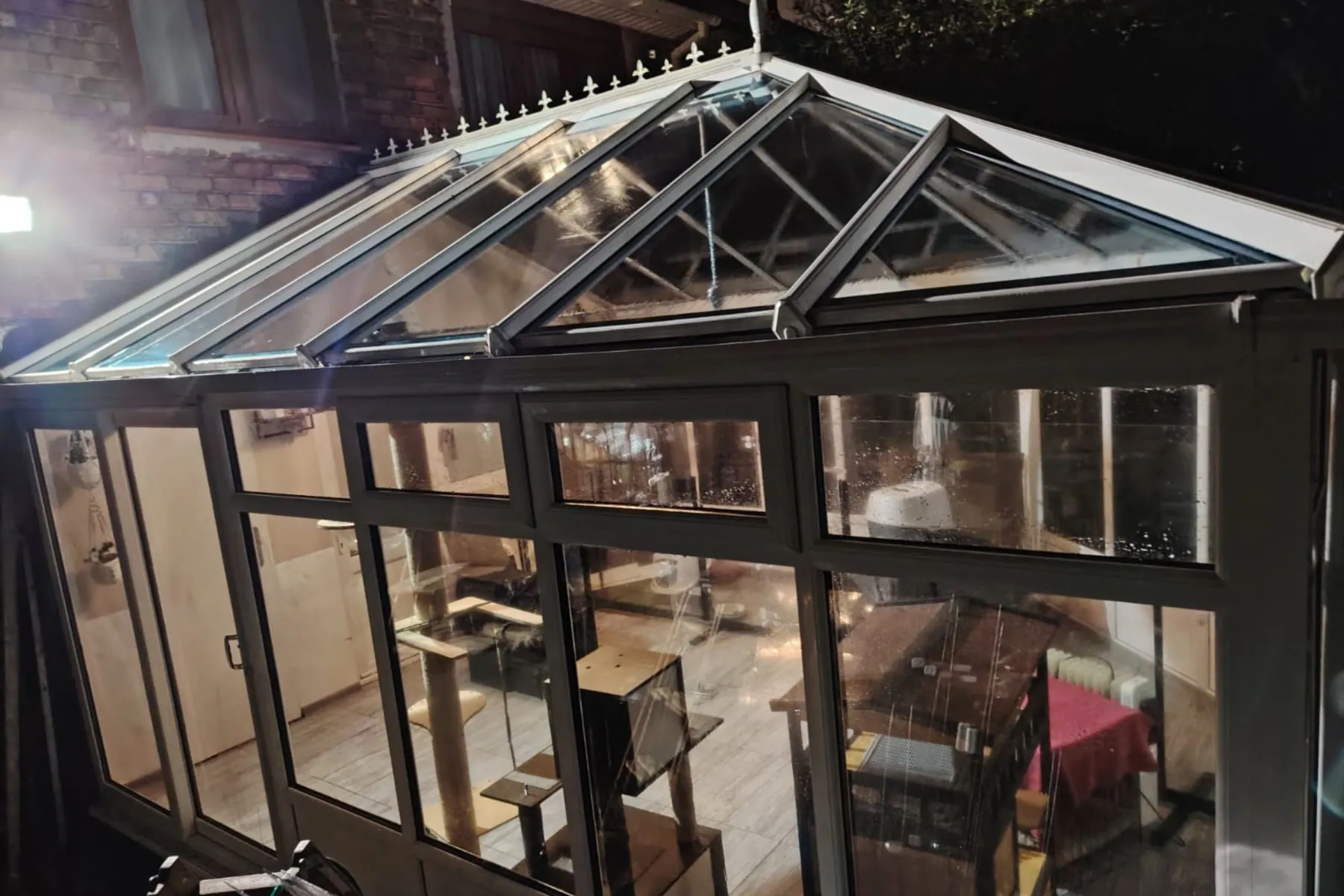
Conservatory and Lean-to Cleaning in Smethwick
Smethwick has two kinds of house for this service. The 1930s semis in B67 have the plot depth for lean-tos and conservatories, most added in the nineties and two thousands. The byelaw terraces around Cape Hill have small walled yards with a brick back addition, so their glazing is a porch at the front or a rooflight over the back addition.
There is real glazing work here, though, and the local factor makes it distinctive. Traffic film from the busy roads leaves a grey deposit on glazing, and it lands hardest on surfaces that face upward. A conservatory roof, a porch panel or a canopy collects that film continuously while a vertical pane sheds most of it, which is why glazed roofs in B66 go dull without looking obviously dirty and why a domestic hosepipe barely touches them. Alongside that sit the post-war blocks, with entrance screens and stairwell glazing nobody living behind them can reach.
- Service
- Conservatory Cleaning
- Area covered
- Smethwick, B66 and B67
- Local authority
- Sandwell
- How we do it
- Soft wash on the roof, no pressure on seals or polycarbonate
- From our Selly Oak base
- About 20 minutes
- Price
- Quoted per property before we start (what the quote covers)
- Booking
- Call or WhatsApp 07788 574283
Grey deposit on Smethwick glazed roofs, more than green algae
Deposit, more than algae, defines much of this work in Smethwick. Grey traffic film bonds onto glass, uPVC and polycarbonate, so it goes flat and grey instead of green and it does not come off with water alone. On a glazed roof, which faces the sky, it builds up faster than on the walls. The 1930s semis in B67 carry real lean-tos and conservatories, mostly twenty or thirty years old now. On the blocks the problem is ownership: entrance screens and stairwell glass belong to everybody and are cleaned by nobody.
- Grey traffic film bonding onto glazed roofs and uPVC, which turn dull and flat
- Glazed roofs and porch panels facing upward, collecting the deposit that vertical glass largely sheds
- Lean-tos and conservatories on the 1930s semis in B67, most of them decades old
- Communal entrance screens and stairwell glazing on the post-war blocks, out of every resident’s reach
- Shop canopies and fascias along the High Street, looking neglected before the glass beneath them does
- Low conservatory and porch guttering, which fills before the house run and overflows onto the frame
A detergent step and a purified rinse against hard water
A detergent step made for uPVC and glazing does the work here, not pressure, because the deposit is bonded onto the plastic. Solution goes on, gets dwell time, then comes off with a purified rinse. That rinse matters more in Smethwick than in the city, because the town is on hard water and hard water left to dry on glass leaves mineral spotting that undoes the whole job. High pressure is avoided throughout: it scratches polycarbonate permanently and drives water past seals on a conservatory that may be thirty years old. Frames, glazing bars and finials are finished by hand.
- Detergent step formulated for uPVC and glazing, since the deposit is bonded on
- Purified water rinse, which on hard water is what stops the glass drying to a film of mineral spots
- Low pressure only, so polycarbonate is not scratched and water is not driven past ageing seals
- Frames, glazing bars and finials cleaned by hand, with uPVC and aluminium treated differently from each other
- Conservatory, porch and canopy guttering cleared and flushed in the same visit
More detail on the equipment and the order of work: how we do conservatory cleaning, step by step.
Lean-tos, porches and block glazing in B66 and B67
On the streets around Cape Hill and Windmill Lane the work is porches and rooflights over back additions. The conservatory and lean-to work is on the 1930s stock in B67, where plots are deeper and rooms were added through the nineties and two thousands. The post-war blocks carry communal entrance screens, canopies and stairwell glazing, quoted as a schedule for whoever manages them. Smethwick is about twenty minutes from Selly Oak, so a slot within the week is usually possible.
Deposit, roof material and neglect on a Smethwick conservatory quote
Size, roof material and how long it has been left set the price on a conservatory, and in Smethwick the traffic film often adds a step, since a bonded film wants a detergent application and dwell time. A roof left for years may need two applications, so photographs are worth more than a description at quoting stage. The grey and the green both come off completely. Ageing inside an old polycarbonate sheet does not, and the quote says which you are looking at.
Why glazed roofs in B66 and B67 want an annual clean
Annually is the sensible cycle for any glazed roof in B66 and B67, because traffic film rebuilds through the year, not seasonally. Properties facing the busiest roads do better still on a shorter interval, and the difference is visible. Communal entrance screens and stairwell glazing on the blocks suit a twice yearly or quarterly schedule, with one visit landing before the darker months. Shop canopies on the High Street want a clean every few months. Porch gutters are cleared at whatever interval the roof is done, since they block first.
Great services delivered by Charles recommend for others
I’m very satisfied with the service I get
Nice man great at what he does
Smethwick · Conservatory Cleaning
Frequently asked questions
Usually a glazed porch at the front or a rooflight over the back addition, and both are worth cleaning at low pressure with a purified rinse. The yards behind these terraces are small, so lean-tos and conservatories are mostly on the 1930s semis in B67, which we clean the same way.
Because it is mostly traffic film. Traffic on the busy roads puts a fine, oily film onto everything, and it bonds onto glazing and uPVC instead of sitting loosely on top. A roof faces the sky, so it collects what the walls shed and goes flat and grey. Plain water will not shift it. A cleaning step made for uPVC and glazing, given proper dwell time, does.
Not the way it is done here. Smethwick is on hard water, and hard water left to dry on a pane leaves mineral spotting that ruins the result, which is why a hose-down from the tap often dries streaky. The rinse is purified water, so the glass dries clear. It is one of the few real reasons a professional finish differs visibly from a careful amateur one in this town.
No. High pressure scratches polycarbonate permanently, and on an addition that has already had decades of weather it drives water past seals and can split a tired glazing bar, which is the usual cause of a leak appearing shortly after a clean. Everything is soft washed at low pressure with the solution given time to break the deposit down chemically instead.
Clear, though not always new. The grey deposit and any green come off completely and the light through the room improves noticeably. What a clean cannot change is the sheet itself: a polycarbonate roof that has spent twenty or thirty years in the sun may have yellowed or clouded slightly, and that stays until a glazier replaces the panels. Glass roofs do not age that way and come back fully clear.
Yes. Entrance screens, lobby glass, stairwell windows and door canopies, reached from the ground with a pole, up to the three storeys a pole can manage, so nobody is working at height on an occupied building. It is quoted as a schedule for the housing provider or managing agent with one invoice per cycle, and grouping the screens, lobby and stairwell glass in one visit saves a separate setup for each.
Other cleaning we do in Smethwick
Tell us about the job
Send a few details or photos and we’ll come back with a clear price and an estimated time, with no obligation.